The Social Exclusion Faced by Immigrant Mothers
When we talk about the social exclusion faced by immigrant mothers, we tend to focus on the visible things. The language barrier, the cultural distance, the playgroup where everyone already knows each other, the school gate where conversations happen in clusters you do not know how to enter.
Those are real, but there is a layer underneath that rarely gets named, and I want to get to it by telling you about a car journey.
What Is Social Exclusion?
Social exclusion happens when individuals or groups are marginalised because of language barriers, cultural differences, or a lack of support networks. For immigrant mothers, this often shows up as feelings of isolation, misunderstanding, or discrimination. It is like being in a room where no one quite knows how to include you, where you are there but not fully inside it.
For mothers navigating uncertain immigration status, that exclusion can have an additional layer. The room is not just unfamiliar. It is one where their presence may be legally complicated, and that changes what it feels like to show up in it, a cost that is almost never named directly.
A Moment That Stayed With Me
Someone I know told me something a while back that I have not been able to stop thinking about.
She was in a car with a friend. Her friend does not have a visa for the country they live in. At some point during the drive she noticed police officers not far away. And she felt scared. Not for herself. For her friend. For what might happen.
She told me this almost as an aside, like it was a small thing.
It was not a small thing, and I kept thinking about the friend in the passenger seat, because that moment, the police car in the distance, the heart rate going up, the mental calculation of what happens next, is not a one-off for her. It is Tuesday. It is the school run. It is the supermarket. It is every ordinary moment of a life lived slightly outside the protection most people around her take completely for granted.
I want to be careful here. Most people who step back from these situations are not doing so out of cruelty. They are doing so out of discomfort or uncertainty about how to help. That is human, but the effect on the person on the receiving end of that withdrawal is real regardless of the intention behind it.
How Social Exclusion Impacts Immigrant Mothers
Isolation and Loneliness
Leaving behind family, friends, and everything familiar creates a gap that is hard to fill. For immigrant mothers, not having someone to lean on or share the experience with leads to a specific kind of isolation. Not the dramatic version but the quiet one. The version where you are managing everything and nobody thinks to ask if you are okay because you look like you are.
The Loss of the Village
Back home, mothers often have a network of grandparents, neighbours, and community groups to absorb some of the weight of early parenthood. In a new country, that village is on the wrong continent. Building an equivalent from scratch takes years and some mothers never fully do it. In the meantime they carry more than anyone around them can see.
Discrimination
Some immigrant mothers face subtle or direct discrimination based on ethnicity, religion, or immigration status. These experiences compound the existing isolation and make it harder to trust that the new place has room for them. The mother who has been made to feel like an inconvenience does not always show up fully in new spaces. She has learned that showing up fully can cost something.
Difficulty Accessing Services
Healthcare, childcare, and social services can feel like a maze to navigate in a new country, especially with language barriers and unfamiliar systems. For some mothers, that maze has additional walls. Services that are theoretically available may feel practically inaccessible when accessing them requires disclosing information that does not feel safe to disclose.

What Genuine Connection and Belonging Can Look Like
Community Groups
Local mother and baby groups, language classes, or cultural events can offer real connection for immigrant mothers who have the access and the safety to participate in them. Meeting others with shared experiences changes the texture of the isolation. Even one person who understands without needing everything explained is significant.
Multilingual Resources
Resources in multiple languages reduce the additional labour of navigating systems in a language you are still learning while simultaneously trying to parent. Accessible information is not a luxury but the difference between a mother who can advocate for herself and her child and one who cannot.
Standing Against Discrimination
Communities that actively name and resist discrimination create safer conditions for immigrant mothers to participate. This is not only about dramatic acts but about the small daily choices of including, asking, and noticing when someone is outside the circle and doing something about it.
Building Skills and Networks
Opportunities for education, volunteering, or joining local networks help immigrant mothers rebuild a sense of agency and connection. The loss of felt competence that comes with moving countries, the specific experience of having been capable and recognised and then suddenly not, is one of the most significant and least discussed costs of migration. Rebuilding it takes time and it requires spaces that make that rebuilding possible.
Cultural Exchange
Sharing traditions, food, stories, and ways of understanding the world builds the kind of mutual knowledge that makes real belonging possible. Not the performative version where a culture is appreciated from a distance but the version where two people actually learn how the other person's world works.
The Layer Nobody Names
Here is what the car journey made me think about that goes beyond the visible forms of exclusion.
For the mother navigating uncertain immigration status, the isolation is not only about language or culture. It is about the calculation some people make when they decide whether a friendship is worth the complexity of what the other person is living. And it is about the calculation she makes about how much of her situation she can safely share and with whom.
How many friendships does she not have because someone decided the situation was too complicated, too uncomfortable, simply too much? How many people looked at her and quietly decided that the risk of knowing her was not worth the cost?
That specific loneliness deserves to be named. I have been thinking about it long enough that it has started finding its way into a book project I am working on. How much of it will make it in I am still not sure. But it should not be left unsaid.
If you want to follow where that research is going, the Marked Research Series on this blog is where that world is being built in public.
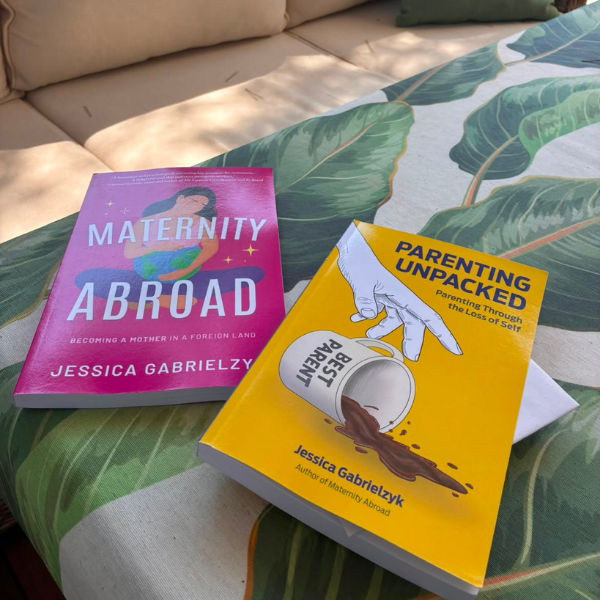
And if you are an immigrant mother navigating the experience of parenting far from your village, Parenting Unpacked is where the loss of felt competence and the specific grief of that distance live in full. The first forty pages are free. 💛
Jessica Gabrielzyk