I love being challenged. That is my kryptonite. Wait. That is the thing that weakens you, right? Not the thing that keeps you going. Let me start again.
I love being challenged. It is my milk chocolate dopamine hit.
The point is: whatever keeps you going.
But the thing is: I also find it genuinely uncomfortable when it happens. Both of these things are true at the same time and I have stopped pretending they are not.
The sell the idea post is a good example (click here to read me spilling all the tea). I told someone their book club needed to sell the idea. She said it is a book club, I do not need to sell anything, and deleted me from every platform she could find. My first thought, before any of the reflection that eventually became a blog post, was this: not opening your mind to think this through and just taking what you have as absolute truth can make you lose exactly what you want.
I held that thought. And then I sat with the discomfort of having delivered accurate feedback at the wrong moment to someone I had known for a few hours.
Maybe my feedback was accurate. Maybe it was not. But I could still be right about the idea and wrong about the interaction. Being right about the content does not automatically make you right about the moment, the relationship, or the way you deliver it.
And then I wrote about it.
That sequence of challenge and sting and reflection is what I am interested in here. Because I have been thinking about how much of my first reaction to being challenged is actually mine and how much of it is cultural.
Why Being Wrong About Culture Feels Different
When someone challenges your intellectual position they are not only questioning the argument. They are, however unintentionally, threatening the image of the person who made it. The person who noticed something. The person who named it. The person who was confident enough to say it out loud.
Erving Goffman called this face, the social image we present and the threat we feel when that image is questioned. Penelope Brown and Stephen Levinson developed politeness theory around the concept of face, showing that almost every social interaction involves navigating that threat, giving it, receiving it, softening it, or ignoring it.
That is why being told you are wrong about a cultural observation feels different from being told you are wrong about a calculation, because the calculation was not tied to your identity but the cultural observation was. It came from your experience, your background, your particular way of moving through the world. Challenging it touches something closer to the self.

Me trying to have some me time and my dog thinking otherwise. But the book is worth it.
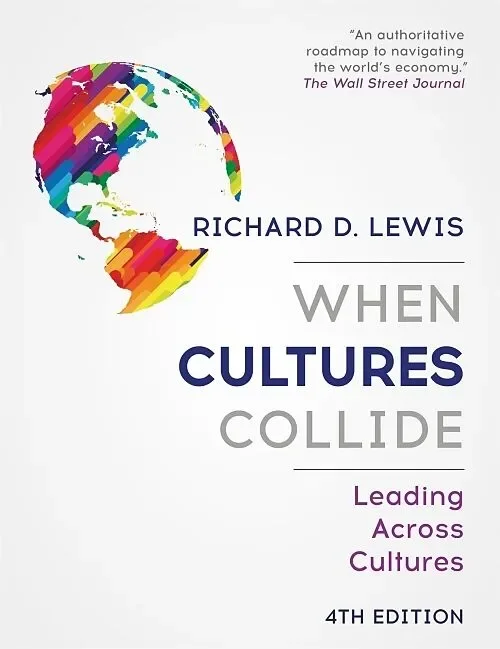
When Cultures Collide by Richard Lewis is the one I recommend to anyone trying to understand why they respond the way they do in a new culture. It makes your own defaults visible in a way that is almost impossible to do from the inside. Click Here to buy.
The Attribution Trap
When we are challenged we tend to explain the challenge in one of two ways: the quality of our argument or the motivation of the person challenging us.
If we trust the challenger, we may be more willing to examine the argument. If we do not know them, if the relationship is new or fragile or the challenge arrives without warmth, we are more likely to explain it as something about them. Their defensiveness. Their closed mind. Their inability to hear it.
Which is exactly what I did in the first five seconds of being deleted from every platform. My first thought was not she might have a point but something about her relationship to being challenged.
That is attribution working in real time. The first explanation is almost never the whole picture. But it arrives fast and it feels true and that is what makes it worth examining.
That is attribution working in real time. The first explanation is almost never the whole picture. But it arrives fast and it feels true and that is what makes it worth examining.
The Cultural Layer Underneath
I grew up in Brazil where directness is valued and debate is a form of affection. Where disagreeing with someone loudly and warmly is not a rupture but a connection. Where being challenged is not the same as being attacked.
I live in Switzerland where disagreement tends to be quieter and more careful and where the social cost of being publicly wrong is higher. Where the same directness that reads as engaged and passionate in Brazil can read as aggressive or arrogant here.
So when I am challenged, which version of myself is responding? The Brazilian who was taught that a good argument is a sign of respect? Or the person who has absorbed enough Swiss register to feel the social weight of being publicly corrected?
I do not always know. And that not knowing is the most honest thing I can say about it.
I always suggest When Cultures Collide by Richard Lewis, to anyone sitting with this kind of question, because it makes your own cultural defaults visible in a way that is almost impossible to do from the inside. You think you are responding to a situation. The book shows you that you are often responding to a map you did not know you were carrying.
Epistemic Humility Is Not Agreement
Epistemic humility is the willingness to acknowledge that your knowledge is incomplete, that your perspective is shaped by your experience, and that being wrong is not a failure but information.
It does not mean agreeing with everyone who challenges you. It does not mean abandoning your position because someone pushed back. It means letting the challenge land before deciding what to do with it. Feeling the sting before explaining it away. Sitting with the possibility that the person challenging you might be seeing something you cannot see from where you are standing.
Does it hurt my feelings when I am challenged? Absolutely. But that is the point. If it did not cost anything it would not be learning. The discomfort is not a sign that the challenge was wrong. It is a sign that it arrived close enough to matter.
Not opening your mind to think something through and just taking what you have as absolute truth can make you lose exactly what you want.
I wrote that sentence in my head in the five seconds after being deleted. It took me much longer to apply it to myself.
I still like being right.
I just do not want being right to become more important than finding out when I am wrong.
Jessica Gabrielzyk