I Am Not a Snob. This Is Just My New Normal.
I live a simple life. So I think. But bear with me. I eat mostly at home. I do not go luxury shopping. I do not own a plane, although I would not say no to one. My underwear is from Primark. When I lived in Australia I loved shopping at Target and Kmart. So you get the picture.
But when it comes down to a robot vacuum, I cannot go back to sweeping. I know. That feels utterly dramatic.
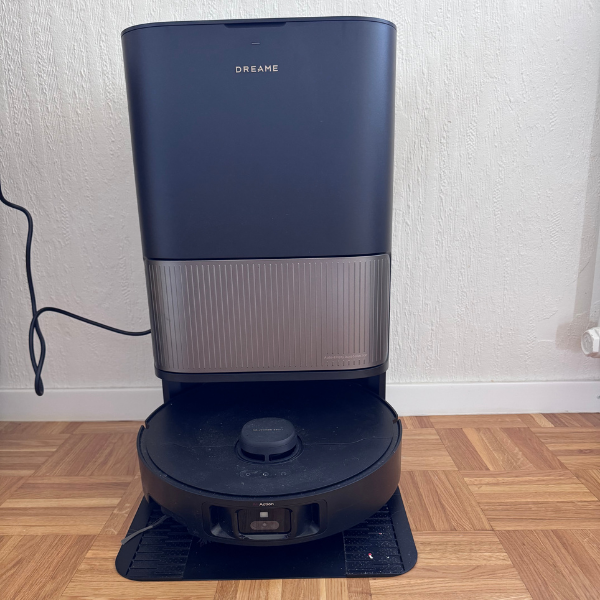
It cost us around 400 euros. Would I go higher with a budget if needed? Probably. I mean. It cleans the floor, wipes the floor, and cleans itself. It runs twice a day some days. And when you live abroad and do everything without a single drop of help, a floor that cleans itself is not a luxury. It feels to me like a baseline requirement for functioning like a human being.
Of course the robot vacuum is just the most obvious example. There are quieter ones too, not having to rely on a car to get everywhere, a certain buying power, a level of security that you stop noticing because it has become the floor.
And that is hedonic adaptation. A word I have been turning over since a conversation with intercultural consultant Marlon Muraro, who is putting together a presentation on repatriation alongside intercultural psychologist Daniele Ribeiro and language professor Andréia Mora, for the SIETAR Brasil conference in October.
Because I started thinking about what happens when the thing you adapted to becomes the thing you now consider normal.
Which sent me here.
What Hedonic Adaptation Actually Is
Hedonic adaptation is the psychological process by which people become accustomed to changes in their circumstances. The initial emotional impact of something new, positive or negative, can diminish as the new circumstance becomes part of everyday life. You get the promotion. You move to the new country. You buy the robot vacuum. And after a while it is just your life. The extraordinary becomes ordinary and the thing you worked so hard for stops feeling like it cost anything at all.
The research is more nuanced than the popular idea that everyone simply returns to exactly the same happiness level. People adapt at different rates and some major life events have effects that last. But adaptation is real and positive changes often become less emotionally powerful as they become familiar.
This does not mean nothing matters but that the feeling that something matters does not necessarily last as long as you imagine it will when you are still waiting for it.
But I think there is another layer to this when you live abroad. Sometimes adaptation does not just change what feels exciting. It changes what feels normal.
The robot vacuum did not exist in my life when I lived in Brazil. I swept the floor. That was normal. I did not walk around thinking one day I hope I can reach the level of adulthood at which a robot cleans my floor.
Now I have one.
And because I have lived with it, it has moved from the category of luxury into the category of normal. If it stopped working tomorrow I would not think how fortunate I was to have this incredible luxury. I would think great, now I have to sweep the floor again.
That is a baseline changing. The things we adapt to eventually stop feeling like upgrades.
They become infrastructure.
Why the Expat Experience Makes This Particularly Interesting
The move abroad is supposed to be the thing, the adventure, the proof that you chose a different life, the answer to the question of whether you were right to go.
And for a while it is. The new city is extraordinary. The daily life is full of friction that keeps everything vivid. The grocery store is an adventure because you do not know where anything is. The bureaucracy is maddening but at least it is interesting bureaucracy. You are fully present because you have no other option.
And then you find the grocery store and figure out the recycling and learn which bin goes out on which day and find the coffee place you like and the route you prefer and the school that works and the doctor who speaks enough of your language.
And then it is a random weekday. A perfectly ordinary day in a country that used to feel extraordinary. The brain adapted. That is all it did.
The extraordinary city became the context of your ordinary life and the move that was supposed to change everything changed the address. The inside of the experience, the baseline you carry with you, came along in the carry-on.
This is worth naming because the expat version of hedonic adaptation has a specific texture to it. The move was supposed to fix the promise of a better life. And it did, in some ways, for a while. And then the feeling of it being fixed faded the way all feelings fade and you are left with a life that is objectively different and subjectively back where you started.
And that is when some people start collecting Plan Bs.
The Direction Nobody Warns You About
Reverse culture shock is hedonic adaptation pointed in the other direction. You spend years adapting to a new country, your baseline shifts, and then you go back to the place you came from and it does not feel like you expected it to feel. The home that was supposed to be home feels slightly off. The people you love are exactly the same and you are not. You adapted without noticing and now the original context no longer fits the person you became inside it.
Hedonic adaptation does not only happen in the new country. It happens in the relationship between who you were when you left and who you are when you try to go back.
That is what Marlon's presentation is going to be about, and it is what I keep thinking about every time I try to imagine going back to Brazil and feeling like myself there again.
The Inherited Scorecard Moves the Goal
The inherited scorecard keeps moving because hedonic adaptation keeps returning you to baseline.
You achieve the thing the scorecard said would make you feel successful, move to the right country, get the right job, find the right school for the children. And the feeling of having achieved it lasts for a while and then it fades and the scorecard, which was never really about your happiness but about the definition of success you inherited before you were old enough to question it, has already moved to the next thing.
This is why the pressure to succeed never fully resolves. Not because you are not doing enough but because the feeling of doing enough does not stay. The baseline shifts and the goalpost moves with it and you are running on a surface that keeps adjusting itself beneath your feet.
The robot vacuum is a 400 euro object that cleans my floor twice a day. Six months ago I did not have it. Now it is part of my baseline and the idea of not having it feels like deprivation. That is hedonic adaptation in one object, where the extraordinary becomes ordinary and the luxury becomes the floor.
The question is not whether you can stop adapting. You cannot. The question is whether you are chasing a goal that is actually yours or one that belongs to someone else's definition of enough, a definition that was handed to you before you knew you were being handed something, and that keeps moving precisely because it was never designed to be reached.
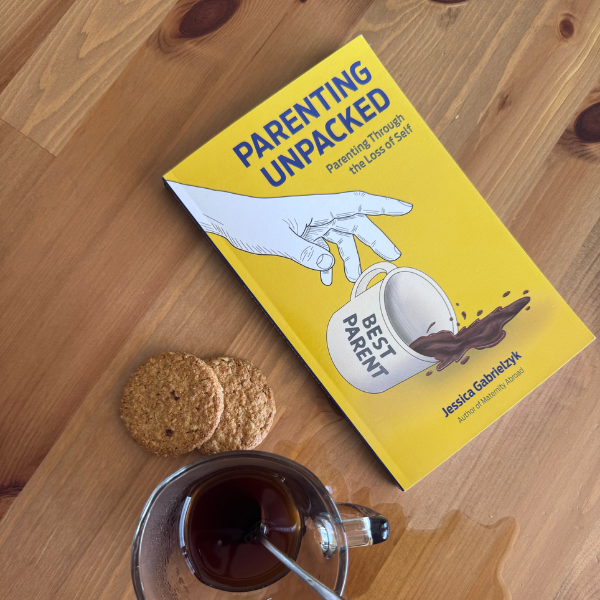
Parenting Unpacked is where the inherited scorecard lives in full. 💛
Jessica Gabrielzyk
PS: Saving us both some time because I know you’re going to ask about the vacuum: 🤖🧹