We Were Using the Same Word. That Was the Problem.
I came across a video of Trevor Noah in conversation with linguist Lera Boroditsky and I think we need to talk about it.
I found a short clip of them talking about language and misunderstanding when Boroditsky said something that got me nodding along. The argument was basically this: language convinces us, wrongly, that words point to real, solid things. Like a potato. You say potato, I say potato, we are pointing at the same thing. But then you say freedom and I say freedom and we assume we are pointing at the same thing too. Except we are not. We are pointing at completely different ideas that happen to share a label. And because the label is the same we never notice that we are not talking about the same thing at all.
I loved this video because it goes way beyond the little equation Portuguese speakers have to do when we see the word “push” on a door. It is about something more fundamental. The assumption that words are fixed. That if we are using the same word we must be having the same conversation.
We are often not.
The Potato Problem
A potato is a potato. You can point at it. Both people in the room can look at the same object and agree that the word and the thing match. Language feels like it works this way for everything. We assume that words are labels attached to fixed realities that everyone can point at and agree on.
But most of the words that matter are not potatoes. Freedom is not a potato. Sorry is not a potato. Success is not a potato. Family is not a potato. Respect is not a potato. And one of the most common examples I give when explaining how much something as simple as a word can set people apart is “peace.”
These words point at ideas, and those ideas can change depending on who is using them, where they grew up, what their parents believed, and what their culture taught them to expect.
The word creates the illusion that everyone is pointing at the same thing. They are not.
What Trevor Noah Said About Growing Up Between Languages
The part that I truly liked was the observation he made about growing up around parents who did not speak English as a first language.
He gave an example from growing up around family members who did not speak English as a first language. His uncle would say put volume on the television. Trevor knew he meant turn the volume up. He did not sit there and say there is no volume to be put here, uncle. He heard the intention underneath the imprecise language and responded to that.
That is a skill. And people who grow up switching between languages or cultures often get years of practice at it without realizing it is a skill. When the words always match the things, you stop questioning whether the words are doing the work you think they are doing.
When the words sometimes do not match the things, you learn to listen differently.
What This Has to Do With Living Abroad
Anyone who has moved countries and had to build a life in a new language knows some version of Trevor Noah’s uncle exercise. Hearing the intention underneath the imprecise language. Translating not just the words but what those words mean coming from this particular person, in this particular culture, in this particular moment.
And the harder version of this is not the one where someone uses the wrong words for the right meaning. The harder version is the one where someone uses the right words for the wrong meaning.
When a Brazilian says sorry it is often reflexive. Automatic. Almost punctuation. It does not necessarily mean I acknowledge I was wrong and I accept responsibility. It can mean I am aware that this moment is uncomfortable and I am signalling that I am on your side.
When someone from a communication culture where an apology is more tightly tied to responsibility hears that same word, they may hear an admission where the Brazilian speaker intended a gesture of social repair.
The Inherited Scorecard and the Words It Gave You
The inherited scorecard does not only tell you what success looks like or who deserves to belong. It also shapes the meanings you attach to words. It gives you a dictionary built from the language you grew up speaking, the culture around you, and the assumptions you absorbed without ever having to question them.
And then you move. You take the dictionary with you. You use those words and assume the person across from you has the same one.
They do not.
This is not a flaw in communication. It is what communication actually is. We use the same word, hear something different, and then have to figure out what the other person actually meant.
Trevor Noah grew up learning to listen past the words. Living abroad teaches you the same thing, usually because the words have already failed you.
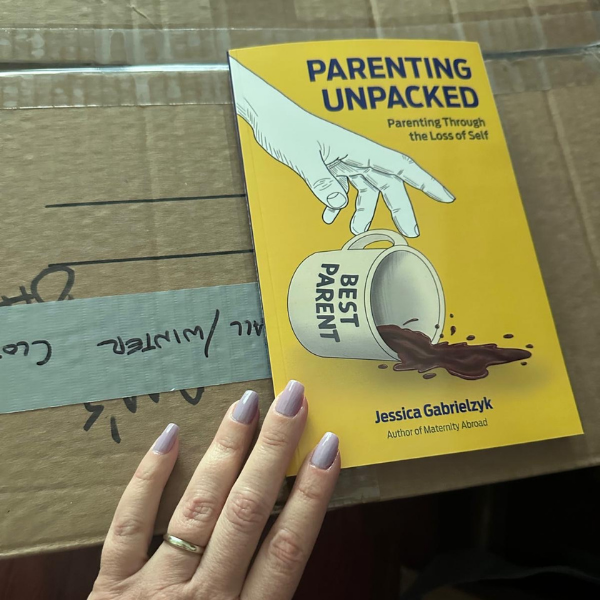
If you want to go deeper into the invisible assumptions language carries across cultures, the Intercultural Glossary on this site is where those concepts live. And Parenting Unpacked is where the experience of living between languages and cultures lives in full. The first forty pages are free. 💛
Jessica Gabrielzyk