What If a Tradition Outlived the Reason It Began? Building the Culture of Marked.
Someone once told me a story about growing up in the Brazilian countryside. Children from his school would arrive with red dirt on their shoes after walking to school from the fields. Children from the main city would make fun of them, calling them pé vermelho, or red feet, as though it were something to be ashamed of.
I still think about that story. Much like the Irish famine history that inspired an earlier part of Marked (read about where the novel started), it made me wonder how an ordinary detail of life could become part of a much larger story. Eventually I had to find a way to bring that question into my novel.
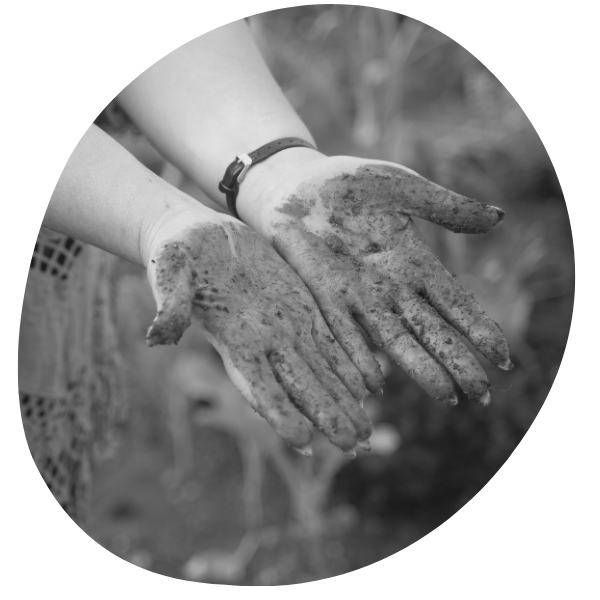
For Marked, my dystopian novel in progress, I am developing a culture built around staining the hands and feet. In the earliest version of the idea, the marks come from working the land. People return from the fields with red soil embedded in the creases of their skin. Over generations, those marks become associated with the work required to feed one another, care for one another, and keep a community alive.
Then society changes. Agriculture becomes mechanised, people move away from the land, and the practical reason for the marks begins to disappear. The tradition survives.
That is the question that interests me: what happens when a practice outlives the circumstances that created it?
We inherit a scorecard from people who lived in circumstances very different from our own. Some traditions retain their original meanings. Others change as each generation reinterprets them. A mark on the skin might become a connection to family, a declaration of identity, a religious obligation, a source of pride, or simply something you carry because the people you love have always carried it.
People within the same community might disagree about what their traditions mean. A practice that one generation considers sacred might seem unnecessary to the next. Something that began as an ordinary part of daily life might acquire significance its original practitioners could never have anticipated.
I want to understand how those changes happen, and what happens when different interpretations collide.
When the State Decides Who Belongs
In Marked, the people who preserve this tradition belong to a distinct cultural group. The government wants them removed from society and pursues them for exclusion.
I am interested in the conflict between a community’s understanding of belonging and a government’s authority to define it.
In the version of the tradition I am developing, the stain is connected to contribution and participation in community life. A person’s place among their people comes from their relationships, responsibilities, and shared history.
But what happens when the state claims the authority to decide who belongs? What happens when official recognition carries more power than the relationships and responsibilities that connect a community? And what happens to a cultural practice when the people who maintain it become targets?
I want to understand how the tradition might change under those circumstances. Would people continue to wear the marks openly? Would some families preserve the practice in private? Would younger generations question a custom that could put them at risk? Would others consider abandoning it an unacceptable loss?
I have not settled on all the answers. I want to understand the culture well enough that the choices people make feel like consequences of their history and circumstances, rather than convenient devices for the plot.
That requires more than inventing customs that sound plausible. It requires looking at how real traditions develop, how people disagree about them, and how political pressure can change what a practice means.
Looking Beyond Dystopian Fiction
Culture is not static. Traditions carry histories of survival, exclusion, adaptation, and resistance, but they rarely have just one meaning.
Take samba, for example. Its history is deeply connected to Afro-Brazilian communities and the legacies of slavery, racial discrimination, and the policing of Black cultural expression. Today, samba also encompasses artistic expression, celebration, community, and livelihoods. Its history remains important, but it does not determine everything the practice means to the people who participate in it today.
That complexity interests me.
I do not want to invent a tradition with a dramatic appearance and give it one convenient meaning. I want to explore how people live with it, change it, disagree about it, and pass it on.
For the culture in Marked, that means asking practical questions. Who prepares the pigment? Where does it come from? Who applies the stain, and does that change as a person grows older? Is the practice part of everyday life, a family ceremony, or both? What happens when someone refuses to participate? Do families in different regions practise it differently?
And what does someone feel when they see another person’s stained hands? Recognition, affection, pride, or suspicion? The answer might depend on who is looking, their relationship to the tradition, and what the stain has come to mean in their own life.
I also want to understand how the practice changes when maintaining it becomes dangerous. Some people might consider preserving the tradition an obligation to their ancestors. Others might decide that protecting their children matters more than keeping the ritual visible. Still others might continue the practice without seeing it as a political statement at all.
None of those responses needs to be the only correct one.
Culture Is Not Decoration
I want the stain to be part of a larger culture, one that shapes how people raise their children, welcome strangers, share food, mourn their dead, and decide whom to trust.
I want disagreements within the community itself. Some people might hold tightly to older meanings. Others might reinterpret the tradition to suit their lives. Some might question whether it deserves to survive at all.
The people facing persecution will not all respond to it in the same way either. Cultural pride, fear, family loyalty, and the desire to protect the next generation can lead people toward very different decisions.
That matters to me because Marked explores what happens when people find their existence and belonging challenged by the systems around them. It is identity migration in its most extreme form: not the gradual shift that comes from moving between cultures, but the forced reassignment of who you are allowed to be by the state that surrounds you.
I am interested in what remains when a person’s history, relationships, and identity cannot be reduced to what an institution has recorded about them.
The stain is one way I am exploring that question.
I am still developing this culture and I expect my ideas to change as I learn more about the histories and social dynamics that might inform it. I want the tradition to feel as though it existed long before the events of the novel began, with meanings that extend beyond the persecution at the centre of the story.
The question I keep returning to is this: how does something as ordinary as dirt on the skin become a connection between generations, and what happens when the people who carry that connection are no longer welcome?
Help Me Research the Culture of Marked
This is where I would love your help, particularly if you have experience researching culture, history, or the ways communities understand themselves.
I would love to hear from historians, anthropologists, folklorists, sociologists, and researchers who study cultural identity, collective memory, migration, or persecution. I would also welcome perspectives from people whose family or community traditions have changed across generations.
There are a few areas where I am particularly hoping for guidance. I want to understand whether there are historical examples of a practical activity becoming a lasting marker of identity after its original purpose has disappeared. I want to know what the way people maintain, reinterpret, or abandon a tradition can tell us about membership in a community. I want to find research or case studies that could help me understand how communities have changed the ways they practise or pass on traditions when public expression becomes dangerous, and why members of the same community might disagree about whether a tradition should be preserved at all. And I want to know where the comparisons I am drawing might break down, because that is usually where the most useful thinking happens.
If you have expertise in any of these areas, I would be grateful for recommendations of books, articles, historical examples, or other research I should explore. If you see an assumption in my thinking that deserves to be challenged, I would welcome that too.
I am not looking for someone to declare my fictional culture authentic. I want to do the research, understand where my assumptions are weak, and make better decisions about the world I am creating.
And if you have a family or community tradition that has changed meaning across generations, I would love to hear about it. What did the practice originally mean? What does it mean now? Have you seen it become more important when a community’s identity was challenged?
This is the beginning of the Marked Research Series. I plan to share the questions I am investigating, the sources I discover, and the ways my research changes the fictional world. Where someone contributes an idea or source that helps me, I would also like to acknowledge their contribution with their permission.
If you have a research lead, a perspective I should consider, or a question that could take this project somewhere unexpected, please leave a comment below or get in touch via email.
I am building a fictional culture, but the questions that shape it come from the real world. I would love to learn from people who know more about that world than I do.
Follow the Marked Research Series here. 💛
Jessica Gabrielzyk