Can I ask you something?
When was the last time you read a book that really moved you? Did you leave a review? Tell a friend? Send the author a message? Or did you simply close the book, think about it for a while, and get on with your day?
I ask because I have been thinking about this quite a lot lately.
Doing things differently from your peers can be thrilling. It can also be incredibly disorienting. You look around, everyone seems to know where they are going, and you are wondering whether you missed a meeting where they handed out the instructions.
It makes sharing experiences difficult, too. Someone tells you what worked for them, you listen, and then you realise you are not having the same experience. Their advice might be perfectly good. It just does not help much when you are dealing with something completely different.
I have been dealing with this my whole life, so I suppose I should not have expected publishing books to be any different.
Naturally, I started looking at the numbers. I have a marketing background, after all. Sales, reviews on the platforms, performance. All the things you are supposed to look at when trying to figure out whether a book is doing well.
The math was not mathing.
Because there was also my inbox.
I was receiving messages and emails from readers sharing their experiences, telling me how they felt when they read my books and how certain parts had moved them. And I started wondering how I was supposed to fit all that into my marketing reports.
A personal message does not go into a spreadsheet. Excel is very good at many things, but emotional connection is apparently not one of them.
It took me a while to understand that my readers were on the same "foreign" path as I was. They were not necessarily following the usual script either. And perhaps expecting them to behave like the average reader was a little optimistic on my part.
So I started wondering: who decided that a review is the proof that a book mattered?
Do most readers leave reviews?
I even did some research. Because apparently, when I have a question, I cannot just have the question. I need to investigate it.
Forrester found that only about 10 per cent of US online adults write ratings and reviews. Clutch reported that 81 per cent of online shoppers do not write product reviews, while PowerReviews found that 42 per cent say they leave feedback. These surveys cover different groups and are not specifically about books, so the figures are not directly comparable. Still, they suggest something worth remembering: lots of people buy things, enjoy things and have experiences with things without writing a review afterwards.
Which, when you think about it, is hardly surprising. We do not usually finish a meal, put down our fork and immediately open a review platform. Well, some people might. I am not sure I want to have dinner with them.
What I actually think:
If I am not behaving like everyone else, I should not expect my readers to do it either.
And that brings me to something I want to try.
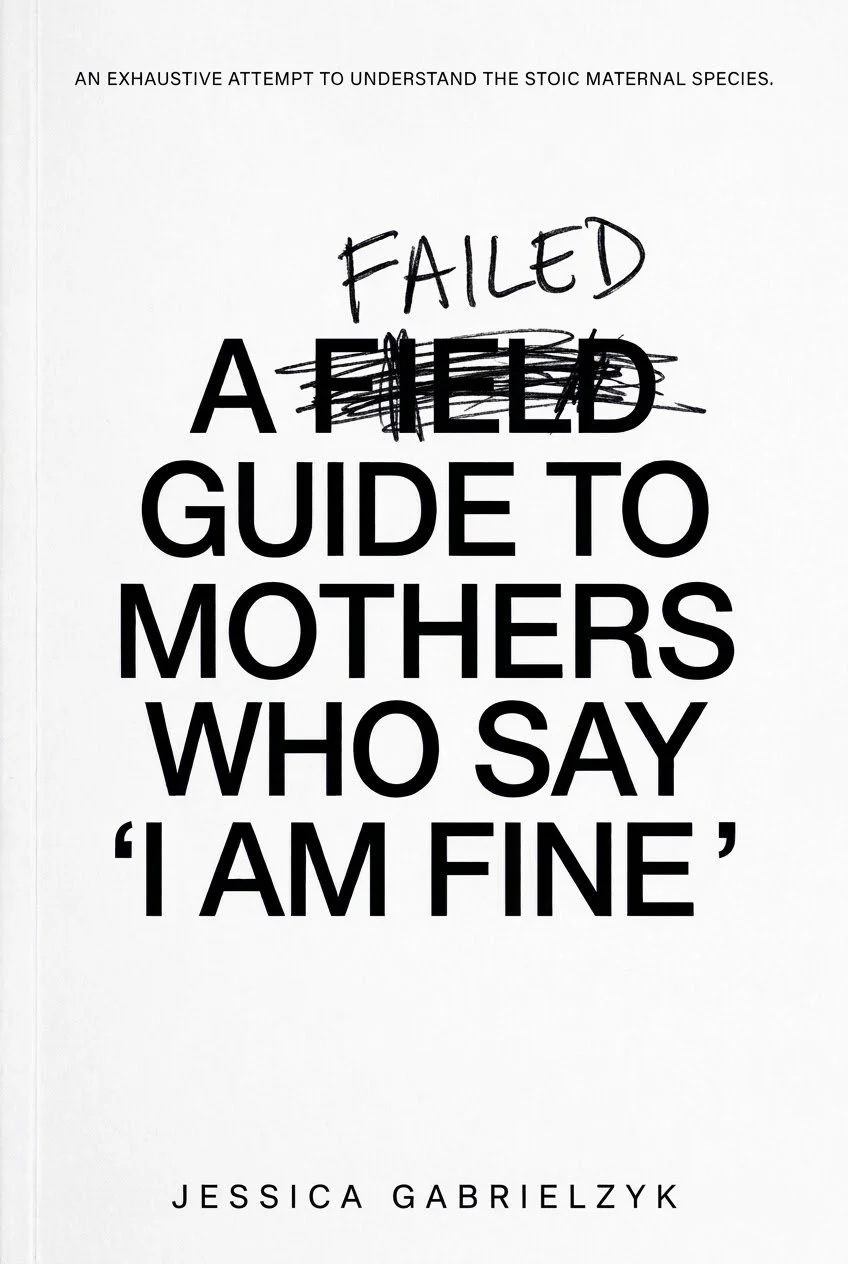
I am writing a short book online, in public. For now, it is called A (Failed) Field Guide to Mothers Who Say "I Am Fine", and it is a funny, honest look at the moments when we say we are fine and absolutely are not. It is still a work in progress, and I will post it as soon as it is available.
When it is ready, I will leave the comment section open there for anyone who wants to share their own story.
You can also email me or send me a message, as many of you already do.
And if you would rather not put your name on your comment, an emoji works perfectly well. A sunflower, a penguin, an avocado. Whatever you like. I am not particularly strict about signatures.
A community of no reviewers
I would love to create a community where people can share their experiences without having to review anything.
A community of no reviewers. I quite like that idea.
Of course, if you do want to leave a review, please do. It genuinely helps me. I am an independent author, and I am not going to pretend reviews do not matter just because I have decided to question their importance as a measure of everything.
They help people discover books and they help authors, so please do not stop writing them on my account!
I just do not want you to think that you need to give me five stars and write a beautifully structured paragraph to be part of this.
You can simply tell me your story.
One small request: please leave out the names of anyone who has not agreed to be named. We can share our experiences without making someone else's story public.
I will add the link to this post as soon as the field guide is live, so come back and have a look.
And before you ask, yes, Marked is still on my desk. I am researching and reading a lot for it. I have not abandoned it. I have simply decided that having several writing projects at once is a perfectly reasonable thing to do. My to-do list may disagree.
But coming back to my original question, I really do want to know.
When a book moves you, what do you usually do?
There is no right answer. I am asking because I suspect the conversation around books is happening in many more places than the review sections.
And I would quite like to hear some of it.
Jessica Gabrielzyk
Frequently asked questions
Do most readers leave book reviews?
Probably not. Consumer surveys suggest that many people who buy products do not leave reviews. Forrester, Clutch and PowerReviews have reported different figures, although their surveys cover different consumer groups and are not specific to books.
Why do readers not leave reviews?
There are many possible reasons. Some prefer to share their thoughts privately, others do not have the time, and some simply finish a book and carry on with their day.
How can I support an independent author without writing a review?
You can recommend a book to someone, send the author a message, share your experience or participate in the comments of an online book. Reviews are helpful, but they are not the only way to support an author.
What is A (Failed) Field Guide to Mothers Who Say "I Am Fine"?
It is a short book Jessica is writing in public, a funny, honest look at the moments when mothers say they are fine and are not. The title is a working title and may change. Readers will be able to share their own stories in the comments, with or without their names.
When can I read it?
It is still being written. Jessica will post it online once it is available and add the link to this page.