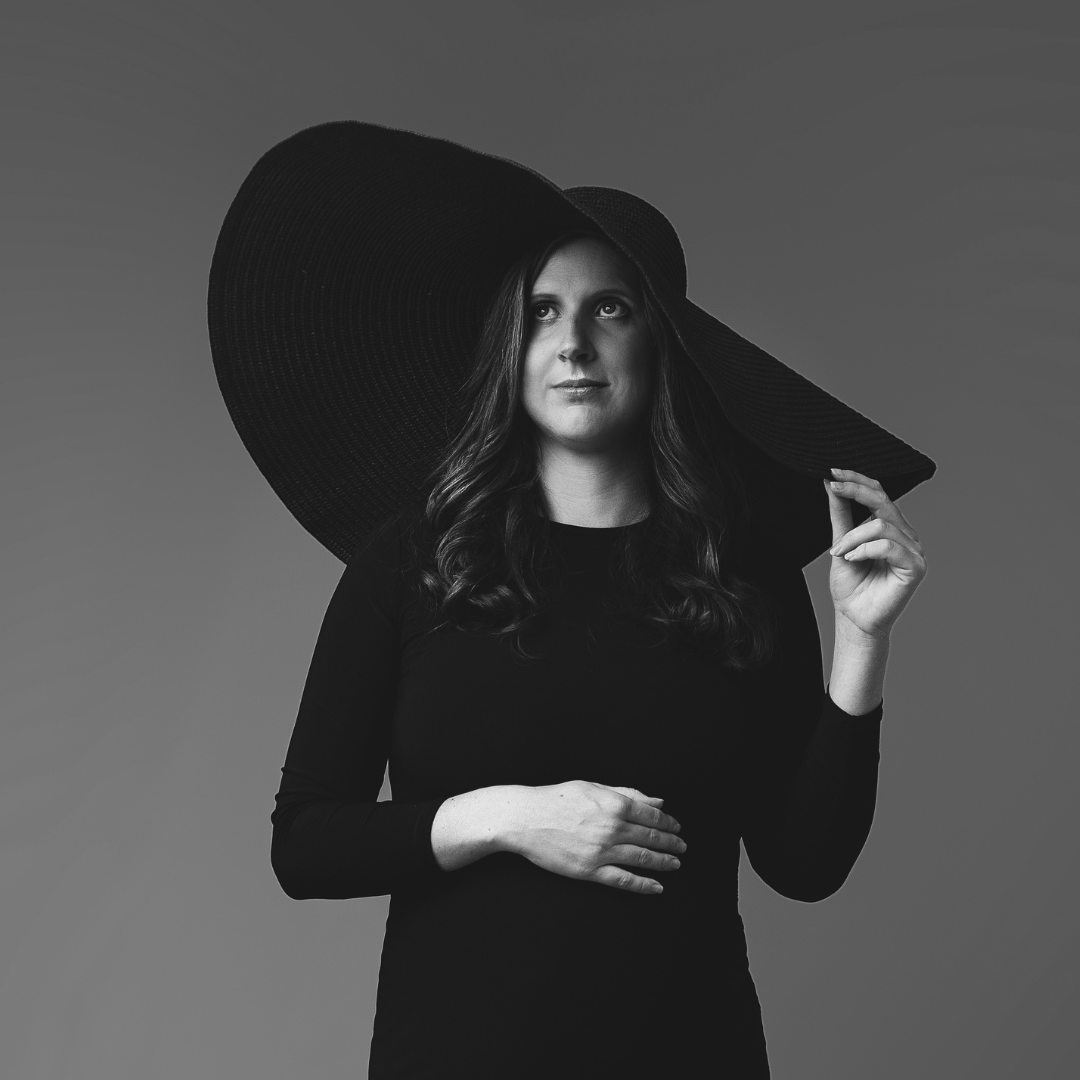
Pfff. Organisation is for the weak. Chaos is for… me, I guess.
Well, technically, I did not aim for it. It just happened to help. Let me tell you what happened.
Have you ever spent days learning a speech in one language, only to be asked at the last minute to deliver it in another?
No? Lucky you. Let me tell you how that goes.
I wrote my SIETAR Brasil talk in English because that is the language I work in. Then I translated it into Portuguese because the conference was Brazilian, and so am I. Showing up with a talk in the wrong language felt rude.
Then I learned the Portuguese version. By heart.
If you are new here, welcome to the land of chaos. It is beautiful. I would not change it for the world.
But if you have been here before, you know I am Brazilian. And, depending on your point of view, perhaps not the most convincing example of someone who should have needed to study a speech in Portuguese like a foreign-language exam, complete with highlighter and worried face.
Then, at the last minute, somebody asked whether I could present in English instead.
Sure! I wrote it in English! No problem at all!
🥴 So I thought.
At some point during the questions, I got lost in translation. My soul left my body because I was convinced I was about to be cancelled.
I wrote that entire episode down in its own post. You can enjoy my misery here: I Felt My Soul Leave My Body at SIETAR Brasil. It Was About One Word.
But enough about my linguistic gymnastics.
Ladies and gentlemen, the speech!
The speech: Raising a child abroad
I started with a question about identity.
How much can a birth certificate or passport really tell us about who we are?
Mine says Brazilian. That is true. But my family history is also a map of migration. My father was born in Uruguay. My paternal family has roots in Spain, Italy, Poland and Austria. On my mother's side, there are German and Hungarian roots.
So, even before I moved abroad myself, migration was already part of my family story.
I left Brazil at eighteen and moved to Australia. I spent years building a life there, eventually becoming an Australian citizen. Later came Portugal, Ireland, another move to Portugal, and then pregnancy.
After years of dealing with visas, documents and immigration processes, I assumed having a baby abroad would be a piece of cake.
Moleza, as we say in Portuguese.
It was not.
The experience of becoming a mother outside my home country exposed how much I did not know about the practical realities of having a child somewhere else. Healthcare systems, insurance, doctors, paperwork, citizenship and the rules that suddenly mattered because a baby was involved.
That experience became my first book, Maternity Abroad: Becoming a Mother in a Foreign Land.
Then, when we moved to Switzerland with our daughter at three months old, I discovered that having a baby abroad and raising a child abroad were two very different experiences.
I was starting again in a country where I did not speak the local language. French was not going to become fluent just because I had a child who needed me to understand how everything worked.
And that brings me to one of my favourite comparisons.
In Australia, I had reached a point where I could study at university, work, deal with everyday problems and feel confident using English. In Switzerland, I could manage a few words of French and a considerable amount of charades.
Apparently, my language-learning abilities had decided to retire.
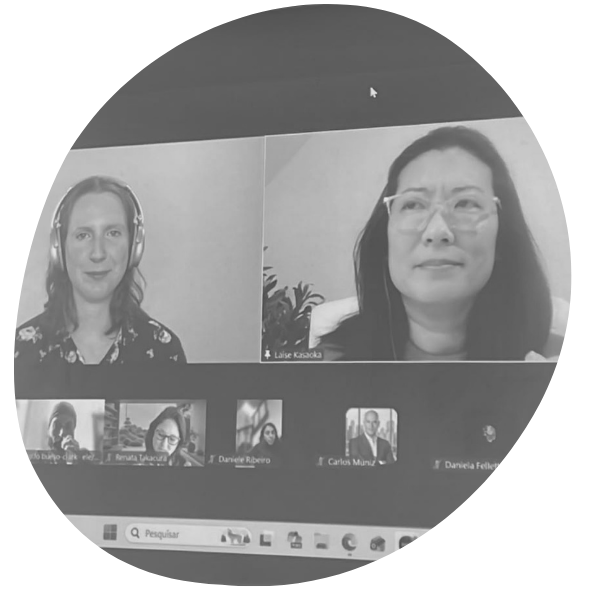
After enough bad photos, you realise the problem is not the photographer. It is the model. I am on the left. 😰
The vaccination adventure
One of the examples I shared was the search for a place to vaccinate my daughter.
The COVID restrictions were coming to an end, and I needed to understand how childhood vaccinations worked in Switzerland.
My previous experience was in Portugal, where I had used the public healthcare system. Switzerland worked differently. Health insurance is mandatory, and I needed to find a paediatrician and understand how vaccinations were organised through local medical practices.
So I did what any sensible person with limited French and a child who needed vaccinations would do.
I emailed hospitals and paediatricians.
And waited.
And waited.
No useful replies.
I was looking for a vaccination centre, trying to work out where I was supposed to go and how the system worked.
Then I spoke to the Portuguese building manager in our building. She pointed me towards a paediatrician nearby.
That was it.
I had been looking for a vaccination centre. The answer was in the lobby.
Sometimes the problem is not that you cannot solve something. You simply do not know which question to ask, which person to ask, or which door to knock on.
And when you are new to a country, even a relatively simple task can turn into a research project.
The judgement comes from everywhere
I also talked about the different kinds of judgement that come with raising children abroad.
There is judgement from the country you left. There is judgement from the country where you live. And then there is the judgement you bring along yourself.
That last one can be particularly inconvenient.
Take the Swiss children who walk to school on their own.
It is normal here for young children to walk to school independently. Parents and communities are used to it. The children learn the routes, and the system supports that independence.
My daughter was approaching four.
Would I let her walk to school alone?
Absolutely not.
I do not have the courage.
The Swiss four-year-olds are fine. I am the one who needs supervision.
And that is part of the experience of raising a child abroad. You are not only learning how things work in another country. You are also working out which of your own expectations you want to keep, which ones you want to question, and which ones you are simply not ready to give up.
What do I want my daughter to inherit?
Another moment I shared came from a podcast interview.
The host asked me what Brazilian thing I wanted to pass on to my daughter.
I froze.
It sounds like a straightforward question. Surely I should have had an answer ready. I am Brazilian. I write about motherhood abroad. I have written books about it. I should be able to name a tradition or two.
Instead, my brain went blank.
Then I thought about our Sunday family meals.
There is rice and beans, of course. But there might also be strudel, sauerkraut and German sausage.
That is our family table.
It is not a recipe for Brazilian identity, and I would not pretend it represents every Brazilian family. It is simply what happens when your family history, your life abroad and the people around your table become part of the same meal.
Perhaps what I want to pass on is not a perfect version of a national tradition. It is the freedom to make a life that includes where you come from, where you have been and the people you have become along the way.
And, apparently, strudel.
What stayed with me
I went to SIETAR Brasil to talk about raising a child abroad.
I ended up demonstrating what happens when you have two languages, a prepared speech and a brain that decides neither language is available when you need it.
But the experience also brought me back to the point of the talk.
Raising a child abroad involves much more than learning a new healthcare system, finding a school or figuring out where to get vaccinations. It also means making decisions about identity, belonging, family traditions and the kind of person you want your child to become.
And while you are doing all that, you are changing too.
That is what my two books explore from different angles.
If the vaccination story sounded familiar, Maternity Abroad: Becoming a Mother in a Foreign Land grew out of the practical experiences of mothers dealing with pregnancy and motherhood in another country: healthcare, doctors, insurance, paperwork and all the details nobody explains before you need them.
And if you have become very good at handling everything abroad but sometimes wonder where you went in the process, Parenting Unpacked: Parenting Through the Loss of Self explores that part of the experience.
Your turn. Let me put you on the spot.
What is one thing from home you want to pass on to your children, even if your version looks nothing like anyone else's?
Mine involves strudel.
Tell me yours in the comments. 💛
Jessica Gabrielzyk