Every Pregnancy Book Makes an Assumption About You. Here Is What Mine Does Not.
I was scrolling before bed again, which is becoming a theme in my life, and I came across The Ordinary's Markup Marché campaign. A banana becomes an Energy-Boosting Bar for 175 dollars. An avocado becomes a Vitality Orb for 305. The point is simple. Branding and positioning can inflate price without changing what is actually inside.
I could not stop thinking about pregnancy books.
So that is why I made my own version: Maternity Abroad. I have written before about how my kind of book did not exist when I needed it.
Every pregnancy book I came across was full of good information, like what you will feel at week 34 or the size of your baby at week 7. I am not arguing with that. But every one of them is also built on an assumption about who is reading it, and I was not part of it.
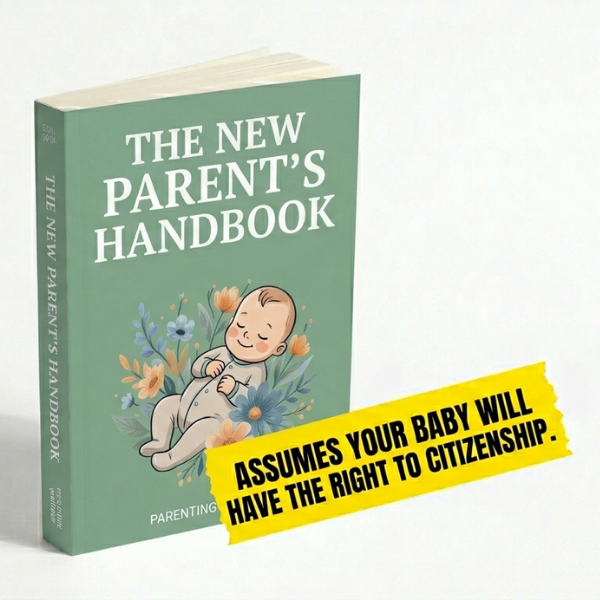
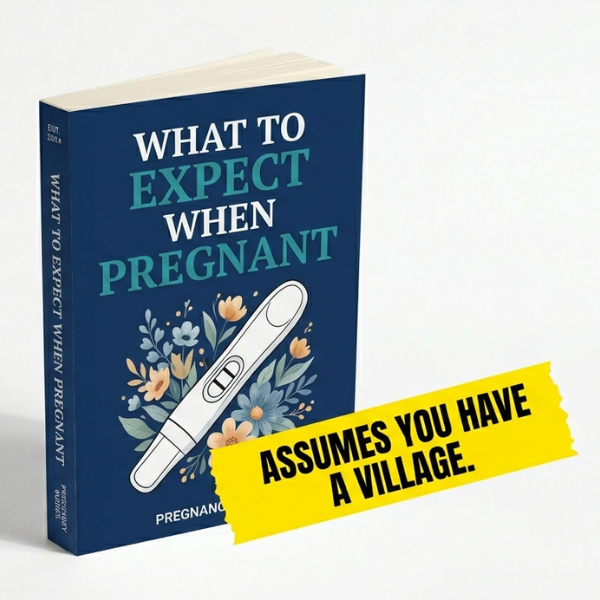
The three covers below are made up, but the assumptions are not. Here is what I mean.
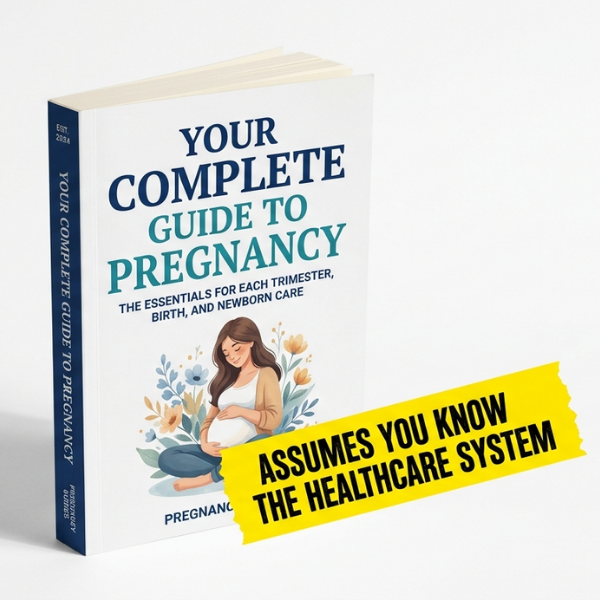
Your Complete Guide to Pregnancy assumes you know the healthcare system. Not because the book says so directly. Because it has to start somewhere, and it starts from the position of someone who already understands how appointments work, what is covered, what to ask for, and who to ask. If you do not have that starting point, the book is still useful, but there is a gap between page one and your actual situation, and nobody tells you the gap is there.
What to Expect When Pregnant assumes you have a village. The advice about support after the birth, about who helps with the night feeds, about who brings food in the first weeks, is written for someone who has people nearby. If you do not, the advice does not stop being true. It just becomes a list of things you now have to build from nothing, on top of everything else.
The New Parent's Handbook assumes your baby will have the right to citizenship somewhere without complication. For most readers that is simply true and never comes up. For a parent giving birth in a country that is not their own, married to someone from a third country, it is a question that needs an actual answer, often before the birth, and the handbook does not know to ask it.
None of these assumptions are wrong. They are just invisible to the reader who fits them, and very visible to the reader who does not.
I did not know the healthcare system, and I paid close to ten thousand euros to find that out. I did not have a village either, just a robot vacuum and a food delivery app standing in for one. I had to find out what my daughter's citizenship situation actually was, because nobody assumed it for me and nobody was going to do that part on my behalf.
The book does not start from the assumptions the other books start from, because I did not have them either. It starts from the actual starting point of the reader it was written for.
That is the difference. A different starting line, not better information.
Jessica Gabrielzyk