I Want to Show You Something: Bilingualism in a Nutshell.
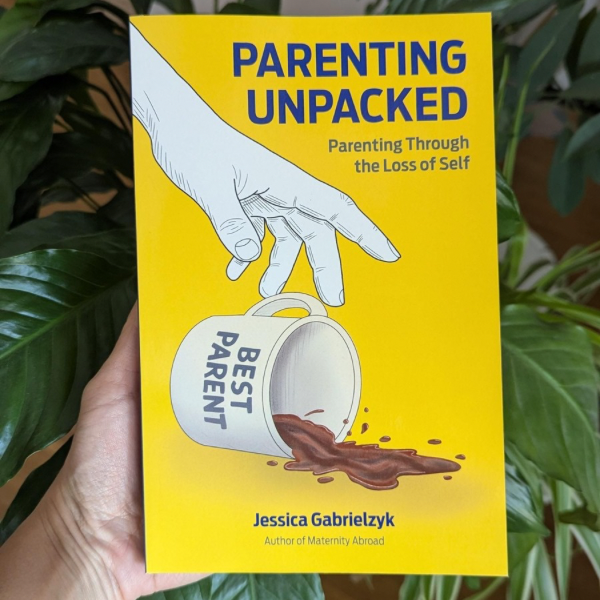
Parenting Unpacked is out and I am truly in love with so many of the pictures and the messages mothers and fathers from all corners of the world are sending me about how they feel when they read something that resonates with them.
This book was a two year long research journey and five full drafts to get to what it is. I think it is fair to share one of my favourite chapters from my first draft.
If you have already finished the book you will find some of the stories that moved to different chapters. And if you are about to start, it is a bit of a spoiler but I do not think it will minimise your experience.
Looking back at this draft, I can see how much I was trying to explain and categorise, before I learned in later revisions that what parents really need is to simply feel understood.
What follows is the original first draft of the bilingualism chapter from Parenting Unpacked. It has not been approved by the editorial team and has not gone through the final correction process. It is shared here as a document of the writing process.
So here we go.
PART 8: BILINGUALISM
Raising bilingual or multilingual kids is an exciting journey full of its own rewards and quirks. It is not just about speaking two or more languages. It is about fostering creativity, cultural awareness, and that aha moment when your child switches seamlessly between words from different languages. Here we will dive into the perks of bilingualism, share real life tips for making language learning part of everyday life, and tackle those tricky moments with a laugh. Let us make language growth a fun family affair that sets your kids up to thrive in a beautifully diverse world.
Bilingualism benefits
Since I started writing this book, my daughter began daycare, and just like that, the French language era in our home has officially begun. In less than three months, her little no transformed into the most adorable non. I cannot handle it. It is heart-melting. But bilingualism goes far beyond just speaking multiple languages. It significantly shapes a child's cognitive skills, cultural understanding, and social interactions. Here are the main benefits.
Cognitive Advantages: Research suggests bilingual children may develop certain cognitive advantages, though the extent and universality of these benefits continues to be debated in the academic literature. What is more consistently supported is the social and cultural richness that multilingualism provides. Studies also suggest that bilingualism may contribute to delaying the onset of age-related cognitive decline.
Cultural Awareness and Sensitivity: Maintaining the native language fosters a strong sense of cultural identity and heritage. Exposure to multiple cultures through language learning promotes empathy and a deeper understanding of diverse perspectives. Bilingual children are often more open-minded and culturally sensitive, enabling them to navigate diverse social environments with ease.
Social and Educational Benefits: Bilingual children can communicate with a wider range of people, enhancing their social interactions and fostering meaningful relationships across different cultures. Proficiency in multiple languages is associated with higher academic achievement, improved reading and writing skills, and increased opportunities in education and career paths.
Economic and Professional Opportunities: Bilingual individuals are highly sought after in the global job market. Understanding multiple languages and cultures can open doors to international business and entrepreneurial ventures.
How do kids learn the language?
Watching my daughter dive into the local language has been kind of mind-blowing. Kids just soak it up when they are surrounded by it. It is like they are little language sponges. Meanwhile, I am over here remembering my own smooth journey moving abroad for the first time at twenty. I did all the right things when I got to Australia: studied English, went to uni, even had local friends. But fluency? Oh, that did not just show up with my student visa. It took a good seven years before I felt as comfortable, sometimes even more comfortable, speaking English than Portuguese.
I guess that is the difference between acquisition and learning. Kids pick it up naturally just by being surrounded by it. Acquisition at its finest. For adults like me, it is more like learning: sitting in class, memorising grammar rules, and still mixing up chicken and kitchen every other day.
But for young children the click is way earlier, especially babies and toddlers immersed in a new language environment from the start. Basic conversational fluency develops almost naturally as they begin speaking alongside their native-speaking peers.
Older kids and teens learn differently, often building vocabulary and conversational skills through social circles, school, and media. As Yaman Moussa shared: "We only spoke Arabic at home when I was little. It was only when I started playing with my neighbour, who was a local, that I began to pick up the language."
From what I have seen and heard, fluency timelines vary widely based on age and level of immersion. For those who fully engage with their new community, basic conversational fluency is often achievable within one to two years, though full academic and native-level fluency typically takes considerably longer. One expat mother shared that it took her son about a year to reach conversational fluency, partly because their social circle included many friends from their own language group.
Does this mean it is always easy for a child or teenager to learn a new language?
It depends on a lot of factors. How similar is the new language to the one the child already knows? What is their previous exposure to language learning? And of course individual aptitude and motivation.
I came across a story about Anya Taylor-Joy, the American actress raised in Argentina. After moving to England at six, she resisted learning English for two years, convinced that avoiding the language might get her sent back home. Eventually loneliness pushed her to adapt: "I had no friends, so I had to learn the language pretty quickly."
A similar experience was shared by Luma, an expat mother of two living in Dubai, whose oldest daughter Olivia was four when they moved. Olivia wanted to learn the language to communicate with the local kids. Although the first contact with the language at daycare was not smooth, to the point where she came home at the end of the day and ran to drink water because she had not wanted to ask her teacher how to go to the bathroom, she excelled and is fluent now.
Gauging how fluent your child is in the local language can be tricky. Take Rodrigo Sereno, an expat father living in Belgium, whose son refused to speak a word of French at home. "I did not know how well he was doing in French," he shared. This experience is common among families adjusting to a new language environment.
For younger children, the reasons are often simpler and rooted in developmental needs. Small children tend to associate the family's native language with comfort and security. They may also lack the vocabulary in the local language to fully express themselves. For teenagers, refusing to speak the local language with parents may be a way to create boundaries between home life and outside life as they build their independence.
What if I want to keep our native tongue alive?
There is a name for that. Heritage language. Language professor Alessandra Ravasi explains: "To maintain a language, the number one priority is at home. It is about who you are sitting with for lunch and conversations. Because the moment you leave home, it is the school, the language of the country."
Speech pathologist Karina Pereira adds: "Exposure to multiple languages has to take into account the role of emotional learning, meaning the natural and organic way children are being exposed to different languages at home."
The truth is, both parents need to partner up. Kids naturally pick up on what their parents value. When both parents agree on the benefits of bilingualism, it becomes a shared priority. Even if one parent is not fluent, their support still plays a significant role in building a language-rich environment.
I can relate to the challenges of keeping a heritage language alive. My dad was born in Uruguay, and although Spanish was his first language, we spoke Portuguese at home and now my own Spanish does not go much beyond hola and dulce de leche. I wish I had more of my heritage embedded in me.
Luana Messias, a mother raising her half-Australian half-Brazilian children in Australia, knows this struggle well. "It is much more complicated to keep the second language fluent when, at home, despite my efforts, English takes over," she shared. "Sienna replies in English to everything I say in Portuguese, and when you are in a hurry, it is just easier to use English to get the message across."
Clinical psychologist Daniele Ribeiro notes: "Preserving cultural identity and the heritage language is a significant challenge for many families, especially for children born outside their parents' home country. Maintaining bilingualism can feel like being one person up against an entire culture or country."
Family back home can be secret language superheroes. Whether it is through video calls full of jokes with grandparents, funny stories from aunts and uncles, or getting postcards with phrases you have never heard before, these moments add a special touch. Kids pick up language faster when they are chatting with family who only speak the heritage language.
What about when the parents do not speak the same language as each other?
This situation is more common than you might think. Speech pathologist Karina Pereira offers a helpful approach called the OPOL rule, or One Parent One Language. Each parent consistently uses their own native language to communicate with the child. For example, consider a Brazilian mother and an Irish father living in Ireland. Using the OPOL approach, the mother speaks Portuguese with the child and the father speaks English. The child is then exposed to both languages within the home itself, with each language having a consistent and familiar source.
A different strategy called Minority Language at Home has both parents speaking the minority language at home, relying on the surrounding community and school to provide exposure to the dominant language. Both approaches have merit depending on the family's situation and goals.
What if we speak with the kids in a language we know but it is not ours?
My husband and I are not exactly clean canvases when it comes to language. After living in Australia and Ireland for years, our conversations are often a blend of Portuguese and English. Recently I noticed that my daughter seems to know more English words than Portuguese ones. I rarely call a blueberry a mirtilo. It is always blueberry at our house.
Language professor Alessandra Ravasi gave me reassurance. Her daughter at three or four years old started saying things like: "Oh, this is Portuguese right? This is Spanish? This is English?" She was beginning to separate the languages on her own.
A recent trip to Chicago for a marathon reinforced my confidence in our approach. I was amazed at how effortlessly my daughter navigated her surroundings, speaking English with ease and confidence. What truly matters is that she feels secure and connected in each language she speaks.
Myth-busting
Does bilingualism delay speech development?
Speech pathologist Karina Pereira clarified: "Bilingualism and multilingualism are never the cause of speech delays in children who grow up in such environments. On the contrary, they can actually facilitate speech and language development. Each case should be evaluated individually, especially when there are underlying factors that may contribute to speech delays."
What are signs a child may need additional support?
Karina notes: "A child who does not reach expected developmental milestones for their age, regardless of the number of languages spoken, may need extra support. Watch for the emergence of first words by around one year, the ability to follow simple instructions by 18 months, and forming short phrases by two years. Early intervention is the best approach and can even be conducted online."
A real life moment to close
Luma had not planned to be at the shopping centre that day. Her husband had taken Olivia and her friend to the movies. But when she spotted them on her way out of a nearby store, she lingered.
Olivia was completely absorbed in retelling the movie plot to her friend. Her English flowed effortlessly, her voice bright with excitement, punctuated by a slight British accent picked up from her international school in Dubai. It was the first time Luma had seen Olivia speaking English so naturally, without hesitation. For months she had wondered. At home Olivia kept that part of herself hidden, speaking English so rarely it still felt like a mystery.
But here, in the middle of a busy shopping centre, Luma could finally see it. Her daughter was not only fluent but completely at ease. She looked like a different person. Independent, self-assured, fully in her element.
Amidst the noise and activity, Luma felt an overwhelming sense of pride. Here was her daughter, bridging languages and cultures with ease, growing in ways she was only just beginning to see.
The final version of this chapter lives in Parenting Unpacked. The first forty pages are free. 💛
Jessica Gabrielzyk