Who Owns Cultural Authenticity?
What is "real"? Who decides? And what gets preserved versus what gets adapted — and by whom?
Let's start with the academic definition, and how it's less tidy than you might expect. Researchers in cultural anthropology describe authenticity not as a fixed quality a culture either has or doesn't have, but as a social process. Something continuously negotiated, performed, and contested. In other words, what counts as "real" culture is not decided once. It is decided over and over again, by different people, with different stakes in the answer.
Anthropologists have also established that cultures are not static. There is no single frozen moment in time when a culture was universally more authentic or more pure than it is today. Every culture is the result of contact, exchange, pressure, and adaptation across generations. The idea that any living culture has a single correct version is, by that measure, not supported by evidence.
Culture is fluid. It changes as people respond to the world around them. What gets called "authentic" often reflects who has the power to define it — but also what communities themselves choose to preserve.
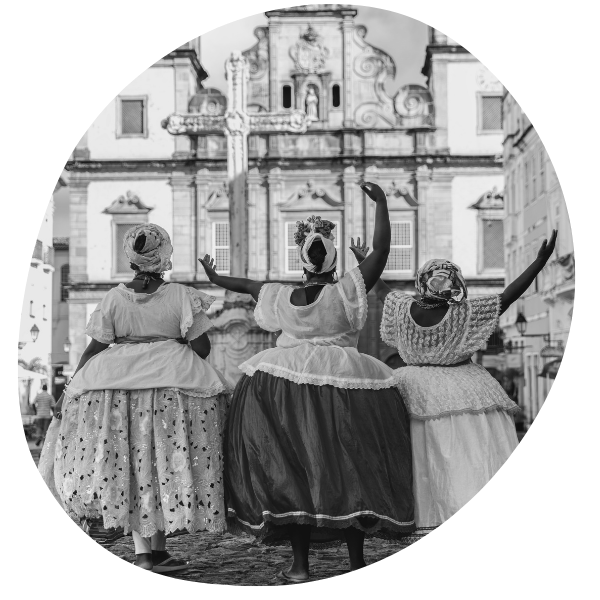
WHO DECIDES WHAT GETS PRESERVED?
For immigrants and expats, this question is not abstract. It arrives on a Tuesday afternoon when your child comes home from school using words in a language that isn’t yours, or when you realise you’ve stopped explaining a tradition because it’s too exhausting to translate the context every time.
Keeping the language alive at home was never about tradition for its own sake. It was about my child having somewhere to stand. A place that was hers before she had to choose anything.
What feels authentic in private is not always what is legible—or accepted—in public. And what looks like simple adaptation from the outside often feels like constant translation from the inside.
This turns out to be backed by research. Studies on immigrant communities show that families who maintain connections to their heritage tend to show stronger senses of belonging in both cultures, not weaker ones. Preservation and adaptation are not opposites. Most people doing this well are doing both at the same time.
WHAT THE RESEARCH ACTUALLY SAYS
Migrants who maintain their heritage while integrating into a new culture are not stuck between worlds. They are building what researchers call a bicultural identity, which is associated with stronger social adaptability and a more flexible sense of self. The American Psychological Association has published on this — it is not a soft concept. It has evidence behind it.
Cultural adaptation is not the same as cultural loss. What changes is not necessarily what matters most. And what stays is not always what was expected to survive.
WHAT GETS ADAPTED — AND WHAT THAT ACTUALLY COSTS
I no longer correct people who call me the wrong version of my name. I order food in French without rehearsing. I have learned to be on time, which is not how I was raised. None of these feel like losses. Some of them feel like relief.
But there are other things I hold more carefully. The language I use with my child at home. The food at certain celebrations. The way I explain where I am from, every single time, without simplifying it into something easier to digest.
And not everyone is given the same freedom to adapt without being judged for it.
This is how cultural authenticity actually works in practice. Not as a single position you take and defend, but as a series of daily, mostly quiet decisions about what to carry and what to set down. Many forces try to shape those decisions—institutions, expectations, other people’s assumptions. But the most meaningful ones are still made in the small choices you control.
Cultural authenticity is not a thing you maintain perfectly. It is something you keep renegotiating. Most people doing it well are not thinking about it in those terms. They are just trying to figure out what to cook for dinner.
The question of who owns cultural authenticity does not have a clean answer. But from where I stand—Brazilian, living in Switzerland, writing about what happens to identity when the world shifts—the most honest answer I have is this:
You do. In the small decisions. In what you keep and what you let change. In the things you cannot bring yourself to translate and the things you have translated so many times they have become something new.
That is not a loss of authenticity.
That is what authenticity actually looks like when it is lived rather than performed.
Parenting Unpacked is about this. The version of identity loss that happens slowly, without announcing itself. June 24th on Amazon.
Still figuring out what to carry,
Jessica Gabrielzyk
✦ CULTURAL IDENTITY · MIGRATION · BELONGING · PARENTING UNPACKED · MATERNITY ABROAD ✦