How to Prepare Your Child for Starting School in a New Country
What does your child actually need before she starts school in a new country? Not the uniform or the school supplies. The thing nobody thinks to give her before the first day. What nobody sends you is a map of what your child is walking into emotionally, cognitively, and socially on the first day she sits in a classroom where almost everything feels unfamiliar.
Mayara Mattos is a paediatric psychologist who works with children navigating exactly this transition. I spoke with her while writing Parenting Unpacked: Parenting Through the Loss of Self, and she said:
"Some parents arrive in the new country and simply place their children in school, expecting them to learn everything on their own. Suddenly, this child has to adapt to a full-time school schedule, and they only find out when they're in it. This can be incredibly frustrating and exhausting, and in some cases, even traumatizing."
The word traumatizing caught me off-guard. While many children adapt remarkably well, for some children, especially those facing multiple changes at once, the experience can become deeply overwhelming. A child who does not yet speak the language, understand the classroom routines, or recognize the social norms is not simply adjusting to a new school. She may be operating close to her cognitive and emotional limits as she tries to process a new language, unfamiliar expectations, and a new social world all at once.
Here is what actually helps.
Learn the structure before she arrives
Every country runs its school system differently. The hours, the expectations, the relationship between teacher and student, what counts as respectful behaviour, how lunch works, whether there is a playground, and even the playground rules can all vary.
Find out as much as you can before school starts. Visit the school if possible. Walk the route together. Point out the building whenever you pass it. Small moments of familiarity can make the first day feel much less intimidating.
Talk about it without making it scary
Mattos is specific about this.
"Parents need to be cautious about not inflicting fear into the child by saying, 'This new system is really different and demanding.' Instead, highlight the positives and make them excited about the new experience."
Children often take emotional cues from the adults around them. That does not mean pretending everything will be easy. It means acknowledging that some things will be different while emphasizing the opportunities to learn, make friends, and discover something new.
If you want to introduce familiar everyday American objects before the first day, My First American Coloring Book does exactly that. The full chapter on anchoring and transitions, including more from Mayara Mattos, is in Parenting Unpacked. Both available now on Amazon worldwide.
Give her a visual map before she needs one
One reason children can struggle after moving abroad is that many parts of everyday life feel unfamiliar. The school bus, the fire hydrant, the mailbox, the way classrooms are arranged, or the food in the cafeteria may all be new experiences. Every other child in the room already understands these routines without thinking. Your child is learning them while also learning everything else.
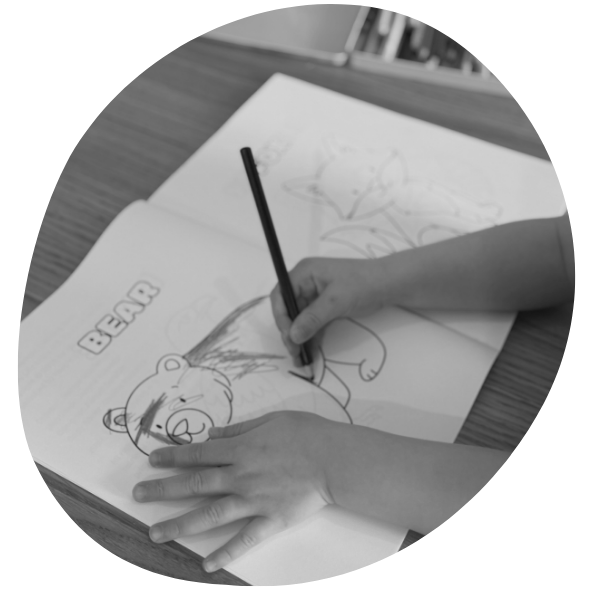
That is exactly why I created My First American Coloring Book: Everyday Life in the U.S. for Little Hands. With 101 illustrations of everyday American life—from school buses and playgrounds to Thanksgiving and baseball—it gently introduces young children to the world they are about to enter. Not a curriculum but a visual map that helps unfamiliar surroundings become a little more familiar before the first day.
Screen-free. Designed for children ages two and up. Available worldwide on Amazon.
Bring something from home
In Chapter 7 of Parenting Unpacked: Parenting Through the Loss of Self, Mayara Mattos shares the story of a family whose child had been struggling after an international move. We explore why familiar objects can become powerful emotional anchors during transitions, and one example has stayed with me ever since. When the child's favourite book was finally brought over from home, the child began sleeping through the night again.
The book did not solve the language barrier or make school instantly easier. What it offered was something equally important: familiarity. One anchor in a room full of unfamiliar experiences.
It does not have to be a book. It can be a favourite toy, a special blanket, a familiar food, a bedtime routine, or a song you have always sung together. Something that quietly tells your child: part of who you were before is still here.
Give her the vocabulary before she needs it
A child who does not yet have the words to describe what she is feeling may struggle to ask for help directly. She may instead act out, withdraw, or try to push through silently.
Talk about what she might feel. Confused is okay, left out is okay, missing home is okay. Give her permission to name the hard things before she is living them.
Watch for the signs that she needs more support
Many children experience some anxiety during the first few weeks of school in a new country. That is a normal part of adjustment.
However, if difficulties continue beyond the first three or four weeks—such as ongoing sleep problems, refusing food, persistent distress at drop-off, social withdrawal, or consistently saying they have no friends—it is worth speaking with the school or seeking support from a paediatric psychologist.
Mattos says some children appear to be coping well on the surface while quietly carrying much more than adults realize. Continuing to ask open-ended questions and staying curious about your child's experience can make an enormous difference.
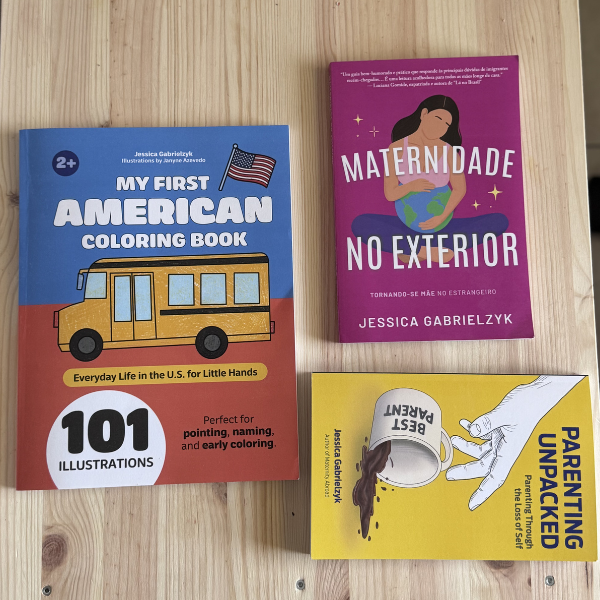
This is my attempt of a nice photo of the books. And that’s why I’m not a photographer. But here’s what Ruth E. Van Reken, Co-author, Third Culture Kids: Growing Up Among Worlds and Co-founder, Families in Global Transition had to say about the book: “While much has been written about the impact of global mobility on children, Jessica invites us into a deeper look at what this experience is like for the adults who raise them. Many who have lived this life will find themselves swept into her story, recognizing it as their own. I know I did. We are not alone. We simply didn’t have words for it before.”
Frequently Asked Questions
How early should I start preparing my child for a new school abroad?
As early as possible—ideally four to six weeks before the first day. Use that time to learn the school structure, visit the building if you can, practise the route, and introduce everyday objects and routines your child is likely to encounter. The goal is not to eliminate every surprise but to reduce how much feels unfamiliar on day one.
What age is hardest for children starting school in a new country?
There is no single hardest age. However, Mattos notes that primary school-aged children often find the transition particularly challenging because friendships and a sense of belonging become increasingly important, while they are still developing the skills to navigate major life changes independently. Toddlers often adapt more quickly because their social expectations are simpler, while teenagers may face different challenges related to identity and established peer groups.
How do I know if my child needs professional support after starting school abroad?
Consider seeking professional support if significant distress continues for several weeks or begins interfering with your child's sleep, eating, friendships, learning, or daily functioning. A paediatric psychologist who understands internationally mobile families can help determine whether additional support would be beneficial.
Should I teach my child the local language before starting school?
Yes. Even learning a handful of everyday words and phrases can make children feel more confident. Knowing how to say "I don't understand," "Can you help me?" or "Where is the bathroom?" can reduce uncertainty during those important first days.
What if my child refuses to go to school?
School refusal is often a form of communication rather than simple defiance. Try to understand what feels overwhelming. Is it the language? A friendship? A classroom routine? Addressing the underlying cause is usually more effective than focusing only on getting your child through the school door.
Starting school in a new country is one of the biggest transitions many children will experience. It asks them to learn a new language, new routines, new friendships, and often a new culture while also adjusting to the loss of what once felt familiar.
Most children do adapt, especially when they have consistent support from the adults around them. Preparation cannot remove every challenge, but it can make those first weeks feel less overwhelming.
Parenting Unpacked: Parenting Through the Loss of Self explores this transition in greater depth, including additional insights from paediatric psychologist Mayara Mattos on what internationally mobile families often get right—and what they commonly overlook. My First American Coloring Book: Everyday Life in the U.S. for Little Hands offers young children a gentle visual introduction to everyday American life before they encounter it in person.
Both are available worldwide on Amazon and other international retails.
Jessica Gabrielzyk