What the Odyssey and a Swiss Diplomat Have in Common.
No, it is not Zendaya playing a role. Although that would be lovely.
This is a follow-up to my previous post about my Western mindset and the question of whether the single mentor model is a Western construct. You can click here to read it in full, or the short version is this: I do not have a mentor, I wondered whether my discomfort with the traditional model was cultural, and Rhoda Bangerter said something so good I compared her to a MasterChef contestant.
Then Rhoda brought this question to her husband.
Her husband is a Swiss diplomat. He had thoughts.
Here is what she sent me:
"My husband has just thrown a spanner in the works. I asked him if he thought having a mentor was a Western concept. He said no: there are masters in Japan, gurus, Greek philosophers with disciples. Without prompting, he even said that what could be a Western concept was the possibility of having multiple mentors 😂 What came to mind is that maybe a lot of business mentors are selling their services for thousands as coaches, or that to have one, I would need to be in a structure like a university or a company.
The conversation continues.
He says maybe what we expect from a guru/mentor is different from what it has been throughout history, i.e. a person who would give you the tools to become a master yourself. And you would have a master/disciple relationship. We expect some help along the way. So it depends which one we are looking for. He says it might be a succession of people one after the other. Apparently, Mentor was also potentially a historical figure. How interesting!"
He is right, and I stand corrected publicly because that is the kind of blog this is.
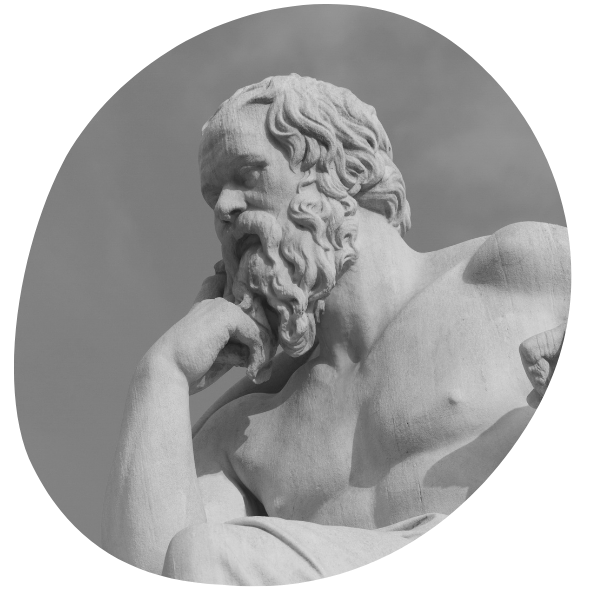
The idea of learning from a master is certainly not a Western invention. Japan has long traditions of master-apprentice relationships. India has its gurus. Ancient Greece had philosophers and their students. Across cultures and throughout history, knowledge has often been passed from one generation to the next through close relationships between teachers and learners.
But then he said something that rescued part of my argument while dismantling the rest of it.
He wondered whether what feels distinctly modern is not having a single mentor, but intentionally building a network of mentors who each contribute something different. I went looking for research to confirm that idea and, interestingly, I could not find any evidence that this approach is uniquely Western. Organizational psychologists have long argued that people benefit from developmental networks and multiple mentors, but they do not frame this as an exclusively Western phenomenon.
Sometimes the most interesting answer is simply: we do not know.
And then he kept going, because apparently the diplomat does not stop once he has started, which I respect enormously.
He suggested that what we expect from a mentor today may simply be different from what earlier generations expected from a master. Historically, many mentoring relationships focused on transmitting knowledge, skills, or a craft so that the student could eventually become a master in turn. Today, many of us are looking for something broader: guidance, encouragement, perspective, and help navigating careers and life. Whether that shift reflects changes in work, education, organizations, or culture is still an open question, but it is certainly an interesting one.
Then he mentioned that Mentor was potentially a historical figure.
That sent me down a rabbit hole.
As far as historians know, Mentor is not a confirmed historical person but a fictional character in Homer's Odyssey. What fascinated me was not whether he existed, but how this character eventually gave us one of the most commonly used words in professional development today.
Mentor appears in Homer's Odyssey as the trusted friend of Odysseus, who leaves him to care for his son Telemachus while he is away fighting in the Trojan War. Although Mentor is a character within the story, some of the poem's most memorable guidance to Telemachus actually comes from Athena, the goddess of wisdom, who repeatedly disguises herself as Mentor.
It gets even better.
The modern meaning of the word mentor, the trusted adviser who guides, encourages, and develops another person, owes far more to the French writer François Fénelon than to Homer. In 1699 Fénelon published Les Aventures de Télémaque, reimagining Mentor as the wise counsellor who educates the future king. The book became one of the most widely read works in eighteenth century Europe and helped transform a relatively minor Homeric character into the model for what we now call a mentor.
It is, I have come to think, its own form of identity migration. The word travelled across three thousand years, changed meaning along the way, and arrived in modern professional development wearing the costume of ancient wisdom while carrying the DNA of a seventeenth century French novel.
So to summarise what a Swiss diplomat accomplished through an unprompted conversation at home: learning from a master is ancient and cross-cultural, the modern idea of mentorship has evolved over centuries, organizational researchers have long argued that people benefit from networks of developmental relationships rather than relying on a single mentor, and one of history's most famous mentors was, during some of the story's most important moments, actually the goddess Athena disguised as Mentor.
I find all of this enormously comforting. Mentorship has never been one fixed idea. It has changed across cultures, centuries, and contexts, and apparently also across living rooms in Switzerland.
I am still going to keep building my own network of people who feed my brain and challenge my thinking.
Rhoda and her husband are welcome anytime.
Jessica Gabrielzyk

If the idea of identity migration resonated anywhere in this post, Parenting Unpacked, Maternity Abroad and My First American Coloring Book are where it lives in full. Available now on Amazon worldwide. 💛