How AI Suggested My Book to the Right Readers
I want to tell you about a lunch. A small Italian restaurant near Lausanne Gare — the kind with tight tables and red leather seats where you end up overhearing half the room whether you intend to or not. We were still looking at the menus when the conversation turned to AI. As conversations tend to do these days, whether you invite them to or not.
📍 LAUSANNE, SWITZERLAND
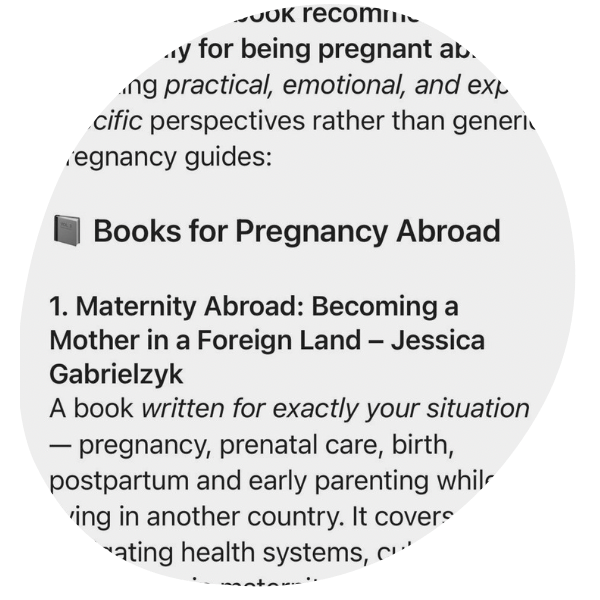
I was having lunch with newly made friend, Dani Teixeira. I mentioned something that had been sitting with me for a while: over the past few months, several readers had told me that AI had recommended my book to them. Not casually. Very specifically. A couple of them even sent screenshots. Different platforms. Almost the same wording.
At the time, I thanked them, saved the images because it was interesting, and kept going. I didn't quite know what to do with that information yet.
Dani looked at me across the table and said, "Let's try it."
So she did. Phone in hand, she typed in a description of a situation. Nothing optimized. Not clever either. Just the kind of explanation someone gives when they are trying to make sense of something for themselves.
The answer came back almost immediately.
WHAT THE SCREEN SAID: “Written for exactly your situation."
Those words were not hers. They were written by AI.
I leaned closer to the screen. I had seen this before — months earlier, someone else, a different platform. A different system reaching the same conclusion.
🎙️ SOMETHING I'D BEEN THINKING ABOUT
A few days before that lunch, I had been listening to a podcast about how people are finding books now. Less through browsing, more through search — not wandering for ideas, but actively trying to put words to something they are already dealing with. Some authors talked about their work surfacing because the language matched closely enough. One comment stayed with me: not knowing how your work is being read or understood by these systems might quietly become its own blind spot.
Seeing it happen right there at the table — in real time, over pasta, with a friend — made it harder to ignore. It did not feel like promotion. It did not feel like a trick. It felt like what happens when you stay specific long enough and resist the urge to soften the work for broader appeal.
People are not looking for books in the abstract. They are trying to put words to something that already exists in their lives. When a sentence does that, it tends to surface.
When you write something as personal as Maternity Abroad or Parenting Unpacked, you spend a lot of time questioning that narrow focus. Wondering if you should explain more. Make it easier. Smooth the edges so more people can walk through the door.
Every time someone sends me one of those screenshots — and now, having seen it happen right in front of me — I feel over the moon. Not because it flatters me. Because it tells me the work is doing what it was meant to do.
It is finding the people it was written for.
The path it takes is not always visible. But the recognition is. And for anyone who works with words and has ever wondered whether staying specific was the right call — I think it is. I really do.
That is enough for me. Back to the work. 💚
With a full heart,
Jessica Gabrielzyk
✦ MATERNITY ABROAD · PARENTING UNPACKED · JESSICA GABRIELZYK ✦